📊 Introduction
In 2026, Core Web Vitals are more important than ever. Google continues to prioritize user experience (UX), and websites that fail these metrics often struggle to rank.
If your website is slow, unstable, or unresponsive, you’re losing:
- Traffic 🚫
- Rankings 📉
- Conversions 💸
In this guide by GearUp Code, you’ll learn exactly how to pass every Core Web Vitals metric in 2026 with practical, proven strategies.
🔍 What Are Core Web Vitals?
Core Web Vitals are a set of performance metrics used by Google to measure real-world user experience.
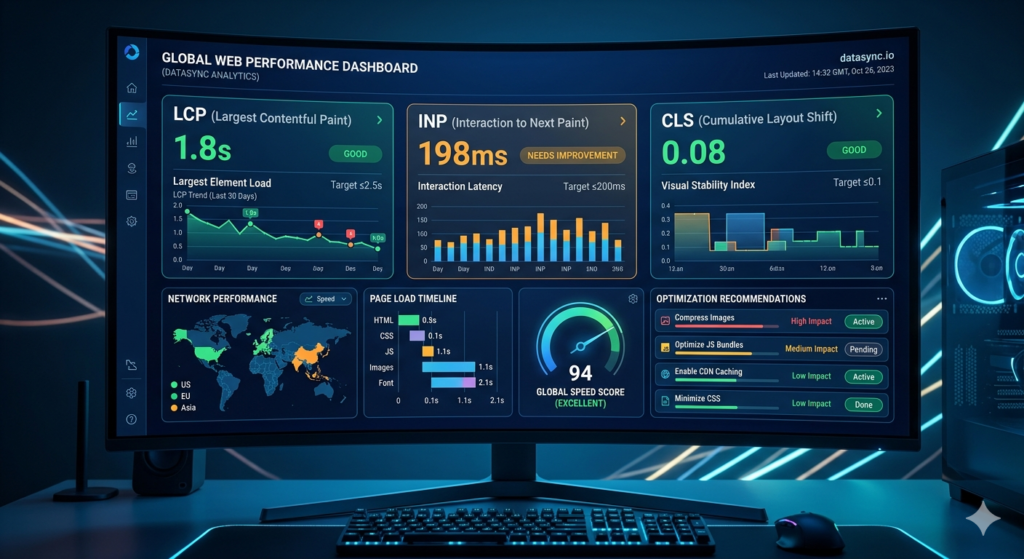
The 3 Key Metrics in 2026:
- Largest Contentful Paint (LCP) – Loading performance
- Interaction to Next Paint (INP) – Responsiveness (replaced FID)
- Cumulative Layout Shift (CLS) – Visual stability
⚡ 1. Largest Contentful Paint (LCP)
✅ Ideal Score:
- Good: Under 2.5 seconds
❌ Common Issues:
- Slow hosting
- Large images
- Render-blocking CSS/JS
🔧 How to Improve LCP:
- Use fast and reliable hosting
- Optimize images (WebP/AVIF formats)
- Enable lazy loading
- Minimize CSS & JavaScript
- Use a Content Delivery Network (CDN)
👉 Pro Tip: Your hero image or main banner is usually your LCP element—optimize it first.
⚡ 2. Interaction to Next Paint (INP)
✅ Ideal Score:
- Good: Under 200 milliseconds
❌ Common Issues:
- Heavy JavaScript
- Poor event handling
- Slow server response
🔧 How to Improve INP:
- Reduce JavaScript execution time
- Break long tasks into smaller chunks
- Use modern frameworks efficiently
- Optimize third-party scripts
👉 2026 Trend: Websites using AI widgets and chatbots often fail INP—optimize them carefully.
⚡ 3. Cumulative Layout Shift (CLS)
✅ Ideal Score:
- Good: Less than 0.1
❌ Common Issues:
- Images without dimensions
- Ads shifting content
- Dynamic content loading
🔧 How to Improve CLS:
- Always set width & height for images/videos
- Avoid inserting content above existing content
- Use reserved space for ads
- Use proper font loading strategies
👉 Pro Tip: Unexpected layout shifts kill user trust instantly.
🧠 Core Web Vitals Ranking Factors in 2026
Google now combines Core Web Vitals with:
- Mobile-first indexing 📱
- Page experience signals
- AI-driven ranking systems
👉 That means passing Core Web Vitals is no longer optional—it’s mandatory.
🛠️ Best Tools to Measure Core Web Vitals
Use these tools to analyze your site:
- Google PageSpeed Insights
- Google Search Console
- Lighthouse
- Chrome DevTools
🚀 Advanced Optimization Techniques (2026)
🔹 1. Use Edge Computing
Deliver content faster using edge servers.
🔹 2. Preload Key Resources
Load important assets early for better LCP.
🔹 3. Optimize Fonts
Use font-display: swap to prevent delays.
🔹 4. Reduce Third-Party Scripts
Too many scripts = slow INP.
🔹 5. Use Modern Image Formats
Switch to AVIF & WebP for faster loading.
📈 Why Core Web Vitals Matter for SEO
Improving Core Web Vitals helps:
- Boost Google rankings 📊
- Improve user experience 😊
- Increase conversions 💰
- Reduce bounce rate 📉
👉 Simply put: Better performance = More revenue
💼 Why Choose GearUp Code?
At GearUp Code, we specialize in:
- Advanced technical SEO optimization
- Core Web Vitals improvements
- Website speed optimization
- Conversion-focused UX design
🚀 We don’t just fix issues—we help your website rank, convert, and grow.
👉 If your site is failing Core Web Vitals, it’s time to Gear Up with experts.
🔚 Final Thoughts
Core Web Vitals in 2026 are not just technical metrics—they are business-critical factors.
If your website fails, your competitors win.
👉 Don’t let slow speed and poor UX hold you back.
Partner with GearUp Code and dominate search rankings today.